
Articles
How to Stop Emotional Eating at Night: A Dietitian’s Guide to Hunger, Triggers, and Self-Compassion
Key Takeaways
- Emotional eating at night is a common human experience, not automatically pathological. Cravings for comfort foods when stressed or lonely are normal.
- Emotional eating becomes a problem when it’s the only tool you have to regulate emotions, or when it shifts into emotional sedation or self-punishment.
- Night Eating Syndrome (NES) is different from typical emotional eating — it involves waking to eat, inability to fall asleep without eating, or consuming most daily calories after dinner, and is a diagnosable eating disorder.
- The most common cause of nighttime emotional eating is under-eating during the day. Adequate daytime nutrition has to come before any other intervention.
- Effective non-food alternatives include time alone to decompress, social connection, permission to eat what you like, rewarding activities that replace the dopamine rush of food, and comfort sources like favorite shows or music.
- Shame is not an effective driver of behavior change. Understanding what emotional eating has offered you (reliability, soothing, distraction) makes it easier to release guilt and meet those needs in other ways.
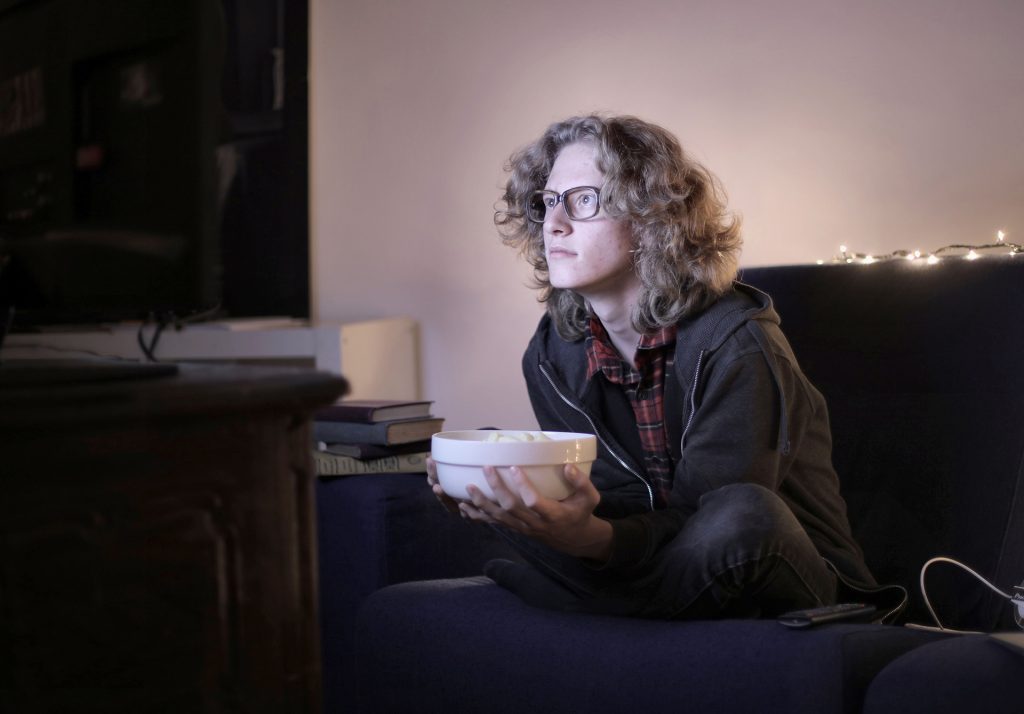 Emotional eating is something many people identify with, and when it tends to cluster around certain times or situations, it can serve as a meaningful signal that our body is trying to communicate something worth listening to.
Is Emotional Eating at Night Always a Problem?
Emotional eating does not necessarily need to be pathologized. We are not emotionless eaters — emotion naturally shapes what we crave, what comforts us, and what we reach for. Consider the pull toward a childhood dish when you’re homesick or wanting chicken noodle soup when you’re unwell. These responses are human and normal (Tribole & Resch, 2020).
The Continuum of Emotional Eating: When It’s Normal, When It’s Not
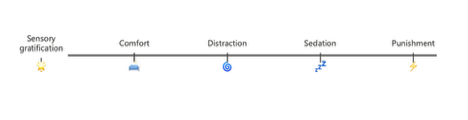 Emotional eating can become dysfunctional when it is the only tool we have to cope with our emotions or when it is used for emotional sedation or self-punishment. Tribole and Resch describe a continuum of emotional eating in Intuitive Eating (4th ed.) that is a useful reference here (Tribole & Resch, 2020).
What Is Night Eating Syndrome (NES)?
Similarly, eating at night does not necessarily need to be pathologized. It is harmful for many to subscribe to the belief that eating past a certain time is ‘unhealthy’. However, night eating can become pathological when we are waking in the middle of the night to eat, unable to fall asleep without eating, or consuming most of our daily energy after the evening meal as a repeated pattern. This is more aligned with the prevalence of Night Eating Syndrome, which is a diagnosable eating disorder (American Psychiatric Association, 2013; Allison et al., 2010).
Why You Might Be Eating Emotionally at Night
Emotional eating at night can stem from a variety of causes. One of the most common but often overlooked is insufficient intake during the day leading to what feels like emotional eating at night but is really a biological drive to meet unmet nutrition needs (Birketvedt et al., 1999). Beyond biology, it can be triggered by emotions such as stress, boredom, procrastination, excitement, loneliness, anger, or anxiety (Van Strien, 2018).
First, Rule Out Biological Hunger
Addressing emotional eating at night starts with ruling out biological hunger. Are you eating enough during the day? Is what you are eating actually satisfying? Once those are addressed, then we can shift to identifying emotions and explore other ways to meet those needs (Tribole & Resch, 2020).
How to Stop Emotional Eating at Night: 5 Compassionate Approaches
Some approaches that can help may include:
- Giving yourself time alone to decompress
- Spending time in connection with others to address loneliness
- Allowing yourself full permission to eat what you like without making it conditional on accomplishing a task (Tribole & Resch, 2020)
- Doing an activity that is rewarding or exciting to help replace the dopamine rush that eating can give us (Koob & Volkow, 2016)
- Meeting the need for comfort by watching a favorite show, talking to a friend or listening to music
Behavioral Strategies for Nighttime Eating
Some behavioral ways to manage emotional eating at night could include:
- Building awareness of your triggers and vulnerability patterns — for example: “I’m most likely to eat emotionally when X happens or when I feel Y” – then working through a cope-ahead plan with your dietitian and/or therapist (Linehan, 2014).
- Using environmental strategies such as portioning snacks into a bowl, rather than eating directly from the bag, and keeping the bag out of reach.
The Role of Shame in Emotional Eating
Finally, it helps to address the shame that often accompanies emotional eating because shame, as the research shows, is not an effective driver of lasting behavior change (Brown, 2010; Tangney & Dearing, 2002). Ask yourself: what has emotional eating offered you? Perhaps it has been reliable when nothing else was. Perhaps it gives you a sense of control, or soothes you, or helps you numb something painful.
Disordered behaviors exist for a reason ,and they serve a function. When you understand that function, it becomes easier to release the guilt and approach yourself with compassion instead. When shame loosens its grip, you can more clearly see how coping with food alone isn’t serving you and recognize that you are capable of meeting your needs in other ways.
References:
Allison, K. C., Lundgren, J. D., O’Reardon, J. P., Martino, N. S., Sarwer, D. B., Wadden, T. A., Crosby, R. D., Engel, S. G., & Stunkard, A. J. (2010). The Night Eating Questionnaire (NEQ): Psychometric properties of a measure of severity of the night eating syndrome. “International Journal of Eating Disorders”, 43(3), 241–247. https://doi.org/10.1002/eat.20692
American Psychiatric Association. (2013). Diagnostic and statistical manual of mental disorders (5th ed.). American Psychiatric Publishing.
Birketvedt, G. S., Florholmen, J., Sundsfjord, J., Østerud, B., Dinges, D., Bilker, W., & Stunkard, A. (1999). Behavioral and neuroendocrine characteristics of the night-eating syndrome. “JAMA”, 282(7), 657–663. https://doi.org/10.1001/jama.282.7.657
Brown, B. (2010). “The gifts of imperfection: Let go of who you think you’re supposed to be and embrace who you are”. Hazelden.
Koob, G. F., & Volkow, N. D. (2016). Neurobiology of addiction: A neurocircuitry analysis. “The Lancet Psychiatry”, 3(8), 760–773. https://doi.org/10.1016/S2215-0366(16)00104-8
Linehan, M. M. (2014). “DBT skills training manual” (2nd ed.). Guilford Press.
Tangney, J. P., & Dearing, R. L. (2002). “Shame and guilt”. Guilford Press.
Tribole, E., & Resch, E. (2020). “Intuitive eating: A revolutionary anti-diet approach” (4th ed.). St. Martin’s Essentials.
Van Strien, T. (2018). Causes of emotional eating and matched treatment of obesity. “Current Diabetes Reports”, 18(6), 35. https://doi.org/10.1007/s11892-018-1000-x

Dietitians specializing in Emotional Eating Support

Aizya Ali-Mohammed RD, LDN

Addison Allee RD, LDN

Carly Apter MS, RD, LDN
Lead Dietitian

Sarah Burkett RD, LDN, CLC

Evie Copeland MS, RD, LDN, CEDS

Deanna Goldstein MS, RD, LDN

Regan Henry MS, RD, LDN, CEDS-C
Clinical Content Coordinator

Madison Judge RD, LDN

Jamie Morgan RD, LDN, CYT
Sarah Nichols RD, LDN, CEDS-C
Lead Dietitian

Holly Nusser MS, RD, LDN

Lizz O’Mahoney RD, LDN

Claire Pedretti RD, CDN, LDN, CEDS-C

Grace Peyron MS, RD, LDN

Amanda Shrake RD, LDN

Maria Stipes RD, LDN

Jordan Thaler MPH, RD, LDN

Stacia Tietje MS, RD, LD, CEDS

Katie Turchen MS, RD, LDN

Anna Tworzyanski MS, RD, LDN

Hannah VanFossen MPH, RD, LDN

Chelsea Straight MS, RDN, LDN, CEDS-C, SEP
VP of Clinical Operations

Start your journey to a
Healthier Tomorrow
Meet Sara and Sabrina. Their team is here to answer your questions and help you find the right Healthier Tomorrows dietitian. After requesting an appointment, someone from their team will follow up with you.
Schedule an Appointment Online Submit Scheduling FormSubmit Scheduling Form
Fill out our scheduling form below. Our team will reach out to you to help you find the right Healthier Tomorrows dietitian.