 Family Based Treatment (FBT) is an evidence-based manualized therapeutic approach for children and adolescents struggling with eating disorders. There is also a modified version, FBT-TAY, for individuals up to age 25. Research strongly supports the use of FBT for Anorexia Nervosa and Bulimia Nervosa (1,2), Avoidant Restrictive Food Intake Disorder (3), and Other Specified Feeding or Eating Disorder (4). There is limited evidence for effectiveness in Binge Eating Disorder, although family support and involvement is still associated with positive treatment outcomes (5).
FBT focuses on empowering caregivers to retake ownership of feeding and eating decisions to promote medical stability, restore weight or catch up on growth, and gradually hand off responsibility for food choices back to their loved one, when appropriate.
A caregiver may wonder, “Why am I plating lunch for my 17-year-old? They should be practicing more independence!”. However, for a person to be independent from the family, they must first be independent from their eating disorder. It is common for the eating disorder to become the primary occupation in a person’s life. This means that due to insufficient nutrition and/or preoccupation with using eating disorder behaviors, tasks that were once routine can become challenging. It does not matter how old someone is when the disorder clouds the decisions. FBT is based on developmental status, not biological age.
Research finds that FBT works faster (as measured by weight restoration) compared to other forms of therapy (6) and reduces rates of hospitalization (7). Research shows that early weight gain in the recovery process predicts long term positive outcomes in FBT (8).
There are three phases of FBT, aptly named phase 1, phase 2, and phase 3 (10). Weight, medical necessity, and the individual’s ability to regulate their emotions without using disordered behaviors all determine what phase of FBT someone is in. The phases indicate who has responsibility in the selection, planning, shopping, and plating of food. Basically, the “what, where, when, and how much” of eating. Phases also indicate how much supervision is needed during meals, after meals, while going to the restroom, or engaging in movement.
In phase 1, the individual is eclipsed by the disorder. The disorder is controlling the individual. This means the support system takes over responsibility for all food and eating related decisions. Independent, unsupervised physical activity is not recommended. The primary focus is decreasing or stopping disordered behaviors, beginning to weight restore, and promoting medical stability.
In phase 2, the individual and the disorder coexist. Caregivers often say, “I’m starting to see my loved one for how they were before all of this”. The individual is able to make recovery-based decisions some of the time, but they still need support! Often times, this looks like caregivers gradually handing back responsibility to allow their loved one to practice. This may look like selecting their own snacks, plating their own snacks, or having an unsupervised meal or snack and reporting back how this went. It’s important to note that FBT phases are fluid and flexible – they can change day to day depending on the amount of support needed! Think about this as giving support to succeed, not taking away anything from them.
In phase 3, responsibility is fully handed back to the individual. It goes back to developmentally appropriate food-related tasks. For example, it may not be appropriate for a 12-year-old to prepare their own dinner, but may be appropriate for a young adult. Caregivers are still there to support where needed and monitor for any signs of lapse/relapse.
If we work to empower caregivers, then what is the role of the dietitian?
Certain dietitians specialize in FBT and are well equipped to serve on an FBT-focused care team. Any treatment of eating disorders, regardless of therapeutic approach, requires a full treatment team. At minimum, this includes a therapist and dietitian, but often includes medical providers such as a psychiatrist, pediatrician or primary care provider specialized in eating disorders, and a family therapist. Re-nourishing someone with an eating disorder is not an intuitive process! The dietitian helps advise on weight restoration, meal plan adjustments, meal planning, and provides medical nutrition therapy for co-occurring conditions often secondary to the disorder such as gastroparesis, osteoporosis, constipation, acid reflux, and more.
Citations
1. https://onlinelibrary.wiley.com/doi/full/10.1002/eat.22042
2. https://jamanetwork.com/journals/jamapsychiatry/fullarticle/210890
3. https://onlinelibrary.wiley.com/doi/abs/10.1002/eat.22994
4. https://link.springer.com/rwe/10.1007/978-3-031-46096-8_92
5. https://www.tandfonline.com/doi/abs/10.1080/10640266.2023.2229091
6. https://pubmed.ncbi.nlm.nih.gov/25250660/
7. https://onlinelibrary.wiley.com/doi/abs/10.1002/eat.22536
8. https://pubmed.ncbi.nlm.nih.gov/19816862/
9. https://jeatdisord.biomedcentral.com/articles/10.1186/s40337-022-00585-y
10. Lock, J., Le Grange, D., Agras, W. S., C. Dare. 2001. Treatment manual for anorexia nervosa: A family-based approach. New York: Guildford Publications, Inc.













Use our online booking system to find a dietitian and schedule an appointment.
Click Here to Schedule Online Now!Fill out our scheduling form below. Our team will reach out to you to help you find the right Healthier Tomorrows dietitian.
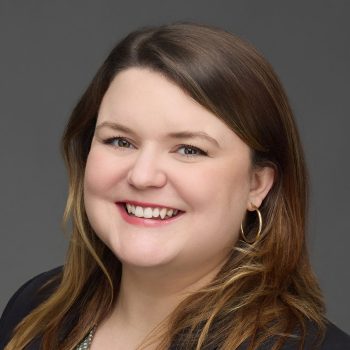
Meet Sara Morrison. Sara and her team are here to answer your questions and help you find the right Healthier Tomorrows dietitian. After submitting our appointment form, someone from Sara's team will follow up with you.