
 Why Family Meals Matter
The family meal. In today’s fast-paced world, busy schedules and competing priorities can easily get in the way. We recognize that family meals are a privilege; not all families have a parental presence at mealtimes due to work commitments or other circumstances. However, breaking bread together offers meaningful benefits. Shared meals offer an opportunity to connect, foster relationships and model healthy eating habits. Research has indicated that regular family meals are associated with healthier dietary patterns and a reduced risk of disordered eating behaviors.
There is no standardized definition of a family meal. To honor the diversity of family structures and circumstances, we can define a family meal as two or more family members coming together to share an eating experience.
There can be an internal pressure for family meals to meet an ideal: the food is gourmet, everyone is present, the atmosphere is oozing peace and tranquility. But this expectation can be unrealistic; I’d like to propose a narrative shift. Bringing just one family meal to life requires a lot: planning, shopping, cooking, and coordinating schedules. For some families, it involves even more: encouraging a reluctant child to come to the table, mentally preparing for potential tension, or navigating the stress of ensuring a child eats what’s expected.
Family meals don’t need to be perfect to be meaningful. The simple act of coming together, sharing food and making space for connection is enough. Here are some ingredients for a successful family meal.
Experiences at the dinner table can have a long-term, subconscious impact, whether positive or negative. Create positive experiences through lighthearted and fun conversation topics or playing age-appropriate games to make meals more engaging. Save tough or uncomfortable conversations for another time.
Keep the mealtime atmosphere low-pressure and supportive. Be mindful of distracting or overstimulating environmental factors, such as loud or persistent noises, bright lighting or the TV on in the next room. Believe it or not, these factors can have an impact on an individual’s eating experiences.
Parents or other adults should model positive eating behaviors without placing pressure on children. Too much attention to what a child is (or is not) eating is unhelpful and can actually have the opposite intended effect.
Children have inner body wisdom and can be trusted to eat the amount of food that is right for them (with some teaching and guidance). For more information on this idea, dig in to Ellyn Satter’s division of responsibility in feeding. The premise is that parents and caregivers determine the what, when and where of eating and the child determines how much (or whether) to eat.
Serve meals family-style to promote autonomy of food choices. If appropriate based on age and ability, allow children to self-serve or even serve others. Every food interaction is an opportunity to develop familiarity and normalize all foods. Including at least one familiar, preferred food option at every meal provides a sense of comfort and security, which can make a huge difference when faced with a new food for the very first time.
Give children a voice in the meal planning process. Instead of open-ended questions like, “What do you want to eat?”, try giving options, like, “Would you like green beans or carrots with dinner?”
Involve children in the meal preparation process by giving age-appropriate tasks, such as washing produce, stirring, or measuring. Even if it’s a bit messier than you’d like, or it takes twice as long, this is an important way to offer exposure to foods in a low-pressure way.
“Playing with food” can be taboo at the dinner table, but it plays an important role; before you redirect your child for “playing with food” consider if it’s causing any harm? If not, consider allowing the child to mash the peas or make shapes with their pasta – it can be a positive, exploratory behavior that ultimately increases comfort and food variety.
Each family system has a unique dynamic, and generalized advice works for many, but not all. Be curious about what works for YOUR family meal. Does celebrating your child’s decision to take a bite of broccoli curate a sense of pride or evoke a sense of pressure? What about a dinnertime game? Is it so distracting for your little one that they forget there’s a plate of food sitting in front of them? Reflect on what makes meals feel successful for your family.
Society’s ‘norms’ for eating are not rules your family must follow. If you or a family member have non-traditional food preferences, like non-traditional food combinations, lean in. What’s the harm? Honoring these preferences promotes autonomy and reinforces body trust.
Family meals are important, and we all deserve a little grace and a reminder that there is no such thing as the ‘perfect’ family meal. Get curious, learn what works, and connect with a Registered Dietitian to build a family meal culture that aligns with your goals.
Citations
Neumark-Sztainer D, Eisenberg ME, Fulkerson JA, Story M, Larson NI. Family Meals and Disordered Eating in Adolescents: Longitudinal Findings From Project EAT. Arch Pediatr Adolesc Med. 2008;162(1):17–22. doi:10.1001/archpediatrics.2007.9
Hammons AJ, Fiese B. Is frequency of shared family meals related to the nutritional health of children and adolescents?. Pediatrics. 2011;127(6):e1565–e1574. doi:10.1542/peds.2010-1440
Middleton G, Golley RK, Patterson KA, Coveney J. The Family Meal Framework: A grounded theory study conceptualising the work that underpins the family meal. Appetite. 2022;175:106071. doi:10.1016/j.appet.2022.106071.
Ellyn Satter Institute. The division of responsibility in feeding. https://www.ellynsatterinstitute.org/the-division-of-responsibility-in-feeding/. Published 2025.
Use our online booking system to find a dietitian and schedule an appointment.
Click Here to Schedule Online Now!Fill out our scheduling form below. Our team will reach out to you to help you find the right Healthier Tomorrows dietitian.
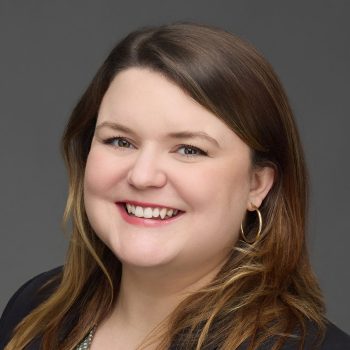
Meet Sara Morrison. Sara and her team are here to answer your questions and help you find the right Healthier Tomorrows dietitian. After submitting our appointment form, someone from Sara's team will follow up with you.