
Articles
Fibermaxxing: A Nutrition Trend We Can Actually Get Behind
Key Takeaways
- Fibermaxxing is a 2026 nutrition trend that encourages intentionally adding more fiber to meals, and unlike most wellness trends, it has solid science behind it.
- Most adults need 25 to 35 grams of fiber per day, but the average American gets only about 15 grams.
- There are two main kinds of fiber: soluble (oats, beans, chia, apples, avocado) supports cholesterol and blood sugar, and insoluble (whole grains, wheat bran, nuts) supports regularity.
- Diets rich in fiber-containing plant foods are associated with lower colorectal cancer risk, relevant as colorectal cancer rates rise about 3% per year among adults 20 to 49.
- Fibermaxxing works because it is additive, not restrictive. The question shifts from what should I cut out to what can I add to this meal.
- Small swaps add up: chia seeds in oatmeal, beans in pasta salad, lentils in ground meat, berries in cereal. A well-planned day can easily hit 50+ grams.
 If 2025 was the year of protein, 2026 may officially be the year of fiber.
“Fibermaxxing” is one of the latest nutrition trends gaining attention online, encouraging people to intentionally increase the amount of fiber they eat throughout the day. And unlike many wellness trends, this one has some pretty solid nutrition science behind it.
What Is Fiber? (Soluble vs. Insoluble)
Fiber is a type of carbohydrate found in plant foods that our bodies cannot fully digest. [1]
Fiber is often broken down into two main categories:
- Soluble fiber dissolves in water and forms a gel-like substance in the digestive tract. It can help support healthy cholesterol and blood sugar levels and is found in foods such as oats, beans, chia seeds, apples, and avocado. [1]
- Insoluble fiber adds bulk to stool and helps keep things moving through the digestive tract. Whole grains, wheat bran, nuts, seeds, and many fruits and vegetables are good sources. [1]
Most plant foods contain a combination of different fibers, which is one reason why variety matters.
Current recommendations suggest that most adults aim for approximately 25–35 grams of fiber per day, with individual needs varying based on age and sex. [2] Yet most Americans are getting nowhere close to that amount. The average American consumes only about 15 grams of fiber per day. [3] So, for most of us, there is plenty of room to add more.
What Is Fibermaxxing? The 2026 Fiber Trend, Explained
There is no official definition or specific amount of fiber that qualifies as “fibermaxxing.” For some people, it may simply mean reaching the recommended 25–38 grams per day. Others following the trend are building diets containing 50 grams or more by emphasizing beans, lentils, whole grains, fruits, vegetables, nuts, and seeds.
At Healthier Tomorrows, we especially like the additive nature of this trend. Instead of asking, “What foods should I cut out?” fibermaxxing asks, “What can I add to this meal?”
Add chia seeds to your oatmeal. Add beans to your pasta salad. Mix lentils into ground meat. Add berries to cereal. Small additions can add up quickly.
The Health Benefits of Fibermaxxing: Gut Health, Cholesterol, and Colorectal Cancer Prevention
Fiber does much more than help you have regular bowel movements.
High-fiber foods help support a diverse gut microbiome, and gut bacteria ferment certain fibers to produce short-chain fatty acids that play important roles in colon health and the gut environment. [1]
Fiber has also become an especially important topic of conversation as rates of colorectal cancer continue to increase among younger adults. According to the American Cancer Society, colorectal cancer incidence is currently increasing by approximately 3% per year among adults ages 20–49. [4]
Cancer risk is complex and cannot be reduced to one nutrient or food. However, diets rich in fiber-containing plant foods and whole grains are associated with a lower risk of colorectal cancer. [5]
What a Day of Fibermaxxing Actually Looks Like: A High-Fiber Meal Plan
Getting more fiber doesn’t necessarily mean eating completely different foods. Often, it means building onto meals you already enjoy.
Fibermaxxing Breakfast Ideas (20+ Grams of Fiber)
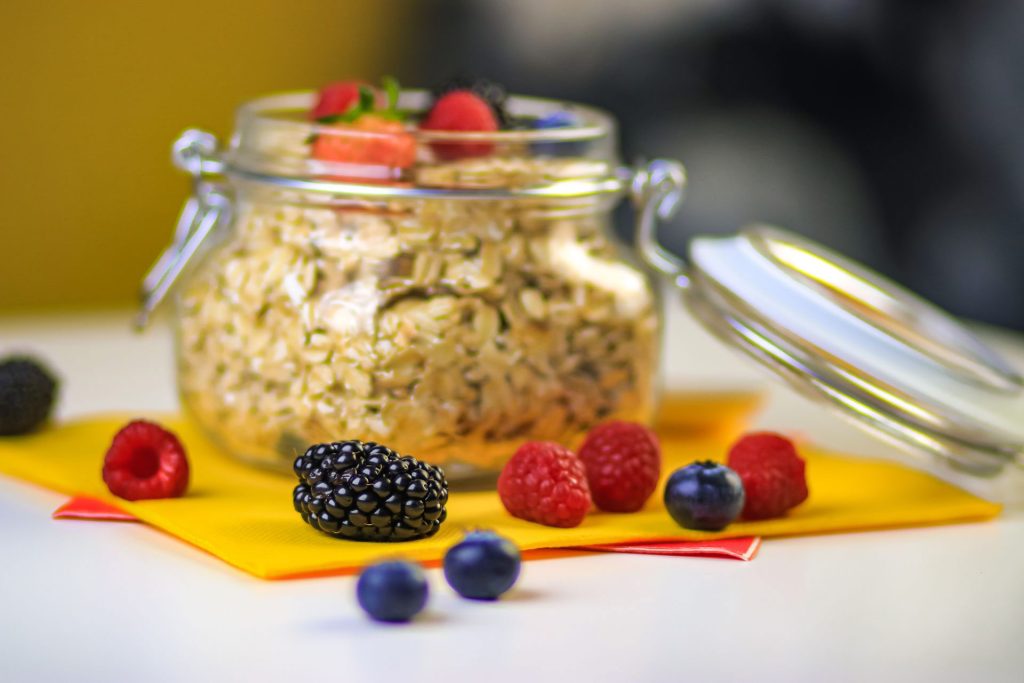
- Overnight oats with chia and berries. Combine rolled oats with chia seeds and your preferred milk or yogurt, then top with raspberries and blackberries. Between the oats, chia seeds, and berries, breakfast alone can provide 20+ grams of fiber, depending on portions.
- Bran cereal topped with banana and blueberries. Choose a higher-fiber bran cereal and add fresh fruit for an easy breakfast that can provide approximately 15–20 grams of fiber.
Fibermaxxing Lunch Ideas (12–20 Grams of Fiber)
- Mediterranean pasta salad. Start with a whole-grain or higher-fiber pasta and add chickpeas, cucumber, tomatoes, shredded cabbage, herbs, olive oil and lemon, and feta if desired. With a higher-fiber pasta and about ½ cup of chickpeas, this lunch can provide approximately 12–18 grams of fiber.
- Tuna and navy bean sandwich. Mix tuna with white navy beans and avocado, then add cucumber, tomato, and mixed greens. Serve on hearty whole-grain bread with cheese if desired. Depending on the bread and portions of beans and avocado, this meal can provide approximately 15–20 grams of fiber.
High-Fiber Snacks (5–8 Grams)
- Crunchy roasted edamame: ~6–8 grams
- An apple or pear with the skin, paired with nut butter: ~5–8 grams
Fibermaxxing Dinner Ideas (10–18 Grams of Fiber)
- Lentil shepherd’s pie. You can absolutely keep the ground meat. Simply replace part of it with cooked lentils and add vegetables such as peas and carrots. With about ½ cup of lentils plus vegetables and potatoes, a serving can provide approximately 10–15 grams of fiber.
- Teriyaki salmon grain bowl. Build your bowl with salmon, edamame, carrots, sliced avocado, cabbage or greens, and a whole-grain base such as brown rice mixed with sorghum. A bowl like this can provide approximately 12–18 grams of fiber.
Daily Fiber Total
Built from these ideas, a full day can total 55–58 grams of fiber.
The Takeaway: Should You Try Fibermaxxing?
We don’t need to turn nutrition into another competition over who can eat the most of a nutrient. But if fibermaxxing encourages people to eat more beans, lentils, whole grains, fruits, vegetables, nuts, and seeds, this is one trend we can get behind.
Rather than focusing on restriction, start asking: Where can I add a little more fiber today?
References
- Harvard T.H. Chan School of Public Health. Fiber. The Nutrition Source. Accessed August 14, 2026. https://nutritionsource.hsph.harvard.edu/carbohydrates/fiber/
- Centers for Disease Control and Prevention. Fiber: the carb that helps you manage diabetes. Updated May 15, 2024. Accessed August 14, 2026. https://www.cdc.gov/diabetes/healthy-eating/fiber-helps-diabetes.html
- U.S. Department of Agriculture Economic Research Service. Healthy vegetables undermined by the company they keep. Published May 5, 2014. Accessed August 14, 2026. https://www.ers.usda.gov/amber-waves/2014/may/healthy-vegetables-undermined-by-the-company-they-keep
- American Cancer Society. Colorectal cancer drops in older adults and rises in young ones. Published March 2, 2026. Accessed August 14, 2026. https://www.cancer.org/research/acs-research-news/colorectal-cancer-drops-in-older-adults-and-rises-in-young-ones.html
- American Institute for Cancer Research. Whole grains, wheat and cancer prevention. Updated January 2, 2020. Accessed August 14, 2026. https://www.aicr.org/cancer-prevention/food-facts/whole-grains/


Start your journey to a
Healthier Tomorrow
Meet Sara and Sabrina. Their team is here to answer your questions and help you find the right Healthier Tomorrows dietitian. After requesting an appointment, someone from their team will follow up with you.
Schedule an Appointment Online Submit Scheduling FormSubmit Scheduling Form
Fill out our scheduling form below. Our team will reach out to you to help you find the right Healthier Tomorrows dietitian.